
Your form is the missing piece.
Most runners train hard and still stay stuck: same aches, same plateau, same nagging issue. The difference isn't effort. It's that no one with the right eyes has actually looked at how you move and given you specific, honest feedback about what to change.
That's what RUN READY is built on.
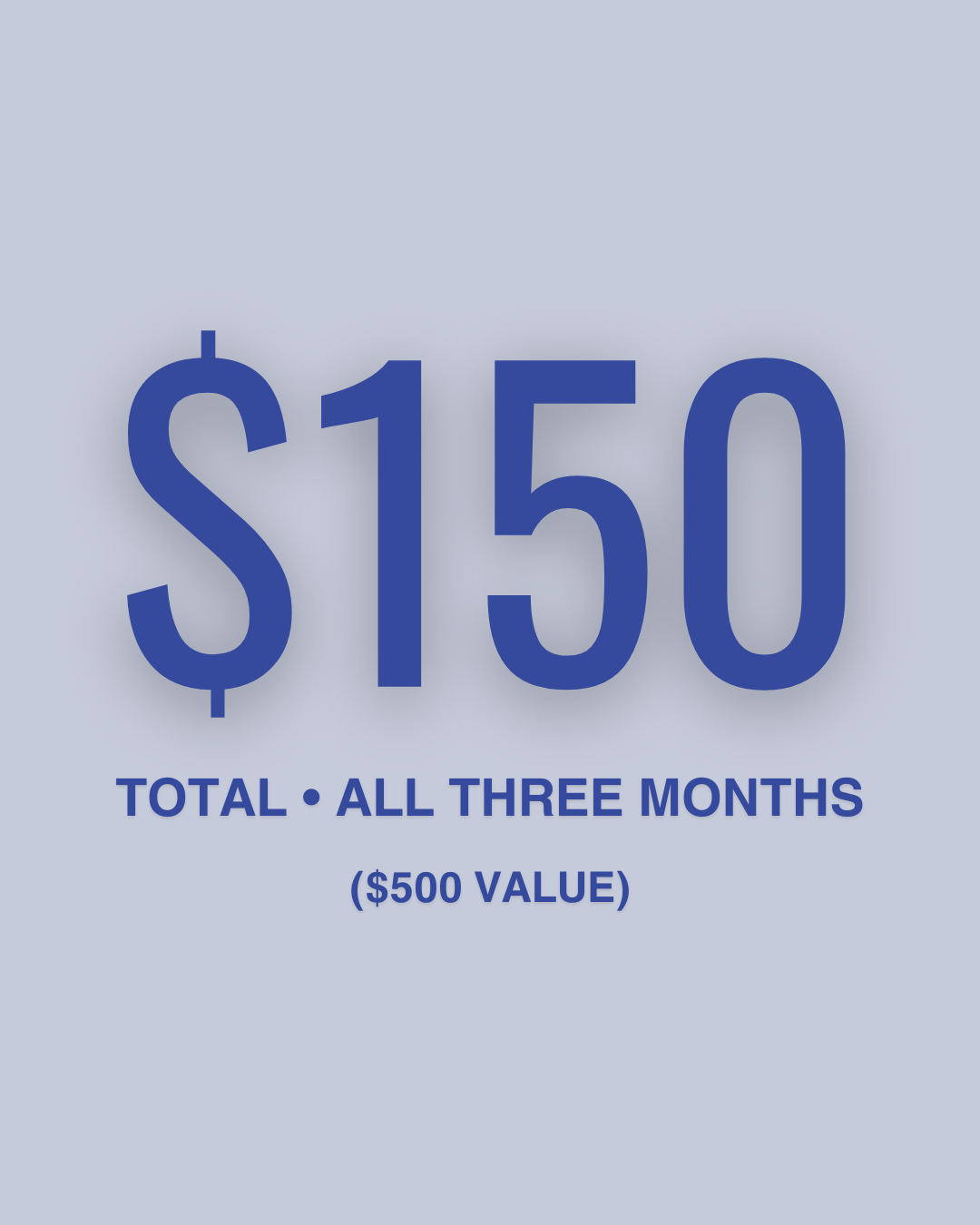
$150 total (value $500) · $50/month locked in for every future workshop
Fully online · Enroll by June 14 · Open to runners everywhere
You've done the work. Something is still missing.
You're not lazy. You're not ignoring the problem. You've already tried more than most runners ever do. And something still aches, still tightens, still doesn't feel right.
What You Tried and Why It Didn't Hold
-
Tightness is often a symptom, not the cause. If the joint isn't moving correctly, the surrounding muscles brace to protect it. Stretching the symptom doesn't change the underlying pattern.
-
Doing squats in the gym doesn’t mean your glutes fire on mile 8. The movement pattern your body uses under load and fatigue is different from what it does in a controlled exercise. Strength has to be trained to transfer.
-
You felt better… and then it came back. One-off treatment without systematic retraining of the pattern means the same mechanics are still there the next time you ramp up mileage.
-
Changing where your foot lands doesn’t necessarily change what your body is doing. The forces at contact are determined by more than foot position and without feedback on what’s actually shifted, you’re still guessing.
-
Rest removes the load. It doesn’t correct the pattern. When you come back, you come back with the same mechanics — which is why the same issue tends to return at the same mileage.
What’s Actually Missing:
Someone who understands how movement patterns cause problems and can see yours specifically. Not generic advice. Not a plan built for someone else.
Eyes on your form, in your exercises and on your run, from someone who knows what to look for and what changes are actually effective for your goals.
This program is fully online — wherever you are, whatever your schedule. All you need is a way to record yourself running and doing your drills.

Summer is the best time to do this work.

Heat slows most runners down anyway. Paces are up, effort is higher, and most training plans ease off intensity between June and August. That’s not lost time — that’s a window.
When the pressure is off the race calendar, you can actually pay attention to how you’re moving instead of just trying to hit the next split. You can submit footage, get feedback, practice the drills, and retest — without sacrificing a training block that matters.
The runners who show up to fall training with a rebuilt foundation — better foot mechanics, hips that actually fire, a core that stabilizes under load — are the ones who run the second half of their race differently.
You don’t build that in September. You build it now.

Get eyes on both your exercises and your run.
Most programs only look at one or the other. This one connects the dots — so you can see whether the work you’re doing is actually showing up in how you move.
EXERCISE FORM
Feedback on your movements
Submit video of your drills and exercises. Get specific, shared coaching on what the group is doing — and what to change. Clinical eyes on squat mechanics, hip hinge, single-leg stability, and more.
RUNNING FORM
Feedback on your stride
Submit your running footage to Dr. Lynne. She will review group submissions and share what she's seeing across the board — common patterns, what to watch for, and what to work on next.
How Progress Actually Happens

Monthly content on the focus area

15 to 20 minutes of targeted drills

Video of your work and your run

Shared coaching on group sessions

Measure and make changes
You don’t guess whether it’s working. You measure it. At the end of each section you retest — and you see, on video, what has actually changed. The goal isn’t to measure more things. It’s to measure the right things, so the feedback means something.
Built in the right order. Because the order is the work.
You don’t guess whether it’s working. You measure it. At the end of each section you retest — and you see, on video, what has actually changed. The goal isn’t to measure more things. It’s to measure the right things, so the feedback means something.
The order isn’t arbitrary. You can’t stabilize the core while the hips are compensating. You can’t address the hips while the feet are still loading incorrectly. Each month prepares the month after it.
MONTH 1: FEET
Foundation · Propulsion · Ground Contact
Where every stride starts — and where forces traveling up your entire kinetic chain are determined. Most runners focus on where the foot lands. What matters is what the foot and lower leg are doing at contact.
Calf strength + loading progressions (near 50% of forward propulsion — are you training it like it?)
Shin angle at contact — not just forefoot vs. heel
Arch mechanics and foot activation
Ankle mobility
Strike pattern analysis via running feedback
Switch to a forefoot strike and still have the same stress pattern? The shin angle never changed. This section tells you whether the work is actually showing up.
MONTH 2: HIPS
Power · Mobility · Repeatable Motion
The engine of your stride. Not longer strides — powerful, durable, repeatable motion that holds up over miles.
Posterior chain mobility — joint and muscle, not just stretching
Glute loading and activation (doing more than most hip programs reflect)
Hip flexor mobility that supports hip drive, not just range of motion
Single-leg stability under load
Hip drive analysis via running footage
Hip tightness or knee pain? Almost always the same finding: the lower back and knee are moving more than the hip. The hip isn't doing its job — so everything around it compensates. This section addresses the source, not the symptom.

MONTH 3: CORE
Stability · Control · Connected Motion
Not crunches — the deep stability that keeps your spine quiet and your hips working while you run.
Deep core engagement and proximal stability
Pelvic stability and controlled pelvic motion under load
Running posture, arm drive, and spinal position
Breathing mechanics as foundation
Full movement retest + before/after comparison
The core responds to what's happening below it. By month three, the foot and hip work you've done sets the core up to actually function the way it's designed to.
For Motivated Runners Ready To Reach Their Potential.
Meet Dr. Lynne Virant, PT, DPT
Physical Therapist | Run Form Specialist | Owner of The Movement Clinic

WHY I BUILT THIS The problems I see in runners — the patterns, the compensations, the things that keep coming back — aren't complicated once you know what to look for. The expertise shouldn't be out of reach. That's why this exists.
WHAT I KNOW FROM WORKING WITH RUNNERS The findings are remarkably consistent: the hip isn't doing its job, so the knee and lower back compensate. The foot strike changes but the shin angle never does. The calf is contributing close to half of forward propulsion and almost nobody is training it that way. These aren't rare findings. They're the norm — and they're fixable once addressed in the right order.
WHO I'VE WORKED WITH Recreational runners and competitive athletes. First-time base builders and thirty-year veterans. The common thread: motivated, putting in the work, and nobody has ever actually looked at how they move.
MY OWN RUNNING I came to this the same way many runners do — through injury. An ankle sprain that didn't resolve led to a knee problem that affected not just my running but my walking. Working through it properly revealed patterns I'd been compensating around for years. Getting older meant the habits that used to work stopped working. I have friends who've decided to stop running. I understand why. But I don't want to stop — I want to run faster, farther, and for a long time. That's what Run Ready is built on.


Get in at the founding rate • Stay for life •
Get in at the founding rate • Stay for life •
This program is valued at $500 for the full three months — which reflects the level of clinical expertise, structured feedback, and hands-on coaching involved. Because this is the first cohort, founding members get in at $150 total.
That founding rate of $150 stays with you. Every future workshop — whatever the length, whatever everyone else pays — founding members pay $150 per workshop.
Enroll by June 14 • Fully online
INCLUDES:
Monthly running form submission reviewed by Lynne
Exercise form review — video submission each month
Monthly movement drill library (15-20 min sessions)
Monthly live group coaching call with Lynne
Section retesting — before & after video comparison
90-day structured sequence: Feet → Hips → Core
Pay only $150 for every future workshop — whatever the length, whatever the going rate
Enrollment closes June 14 • Questions before registering? Reach out directly.

Your form is the answer to the problem you keep having.
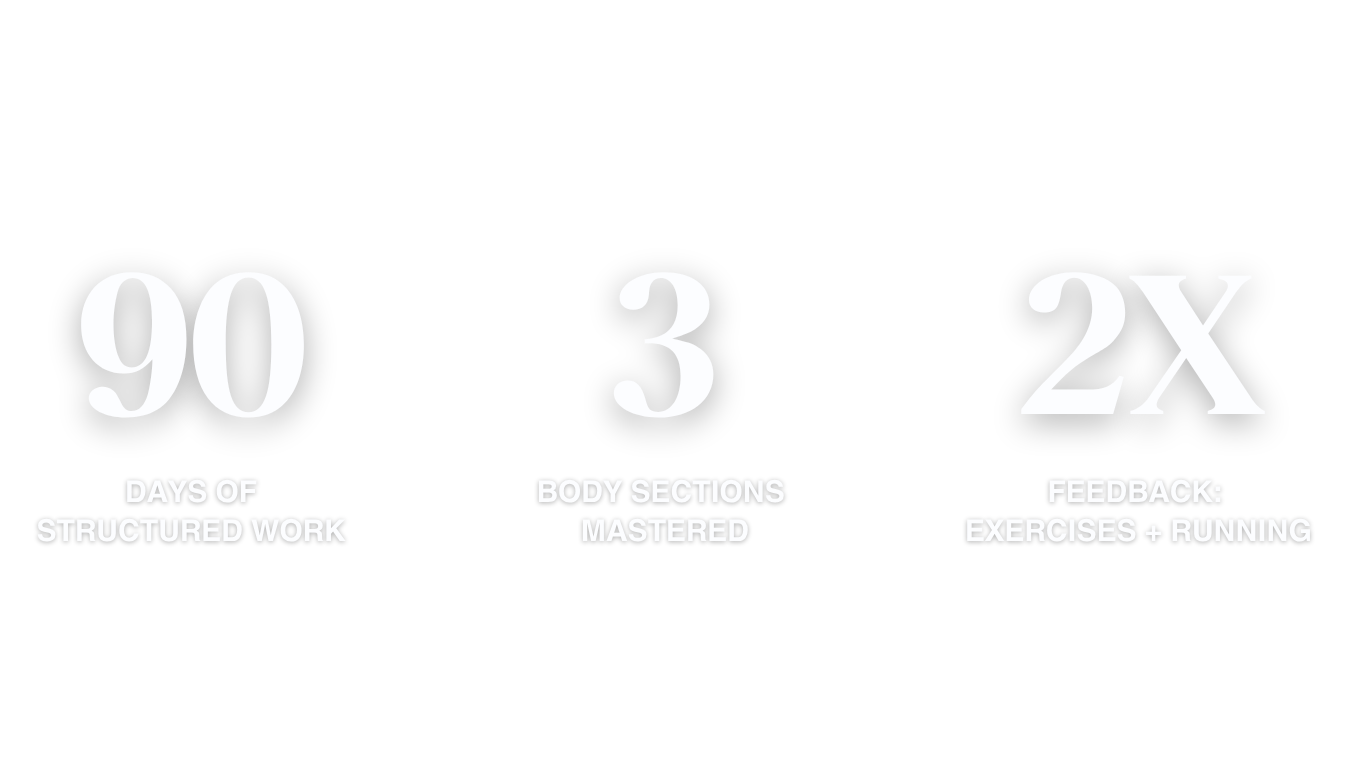
90 days. Feet, hips, core — in the right order. Feedback on your exercises. Feedback on your run. Systematic progress with measurable outcomes you can actually see.
The runners who understand how they move — and do something about it — are the ones who keep running. Faster, farther, and for a long time.
Run Faster. Farther. Forever.
